Getting Started: Collecting Data Ethically.
Good data depends on trust. Whether you’re asking neighbors about their experiences or visiting restrooms to see conditions for yourself, how you collect information matters as much as what you collect. These guidelines protect the people you talk to, keep your findings credible, and keep the focus on better public infrastructure.
Before you start:
a few ground rules
Our guiding principle
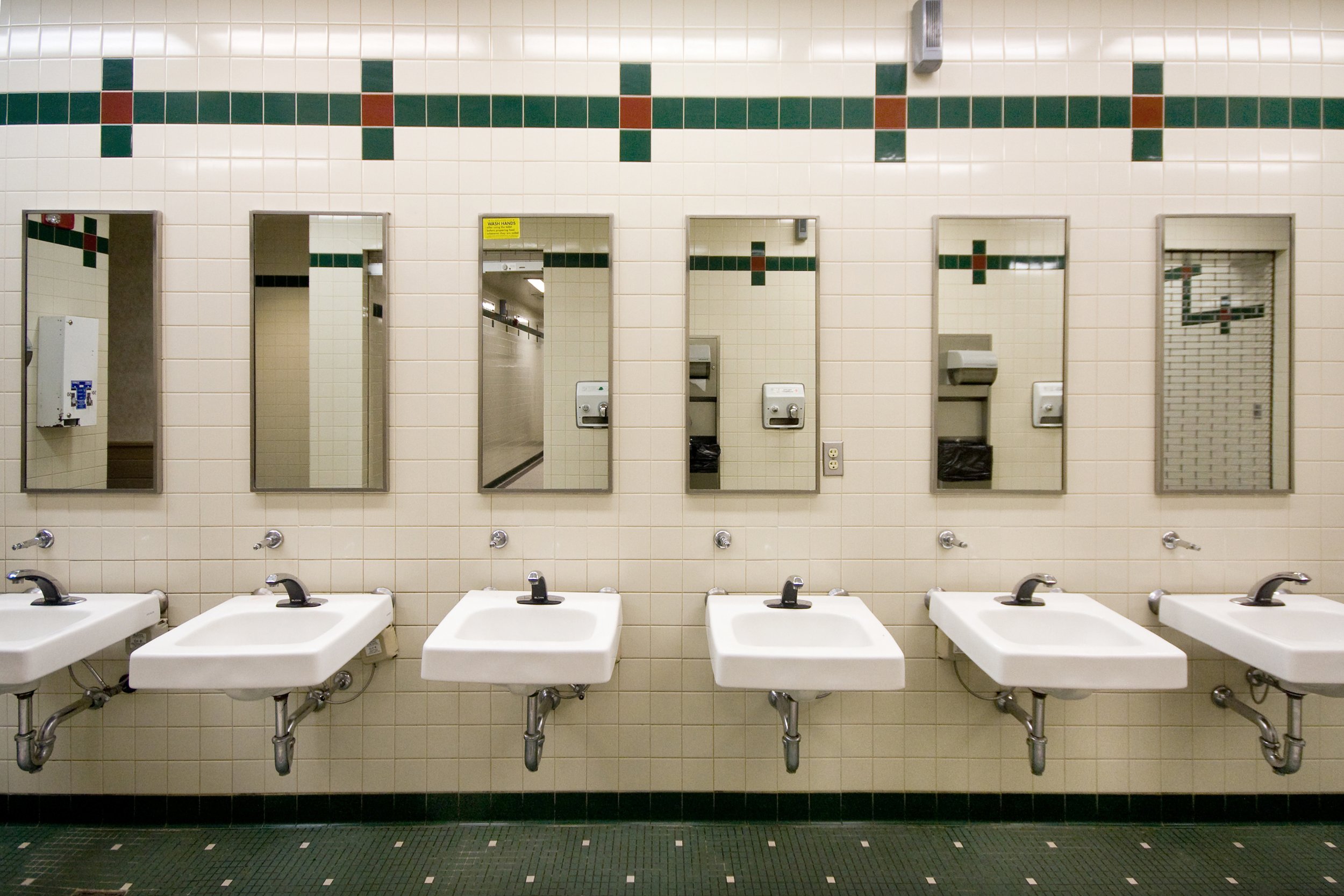
This project exists to improve public restroom infrastructure, not to blame workers or shame communities. Restroom access affects everyone, including unhoused neighbors, and findings should never be used to push people out of public spaces. Collect and share everything in good faith.
When you’re surveying people
Keep it voluntary.
People can skip any question or stop at any time. Tell them that up front.
Say what it’s for.
Give one sentence on who’s running the survey and what happens to the answers.
Keep it anonymous by default.
Don’t ask for names. Keep any emails separate from the answers, and share only overall results, never individual responses.
Ask before you quote.
Use a quote publicly only if the person said yes to follow-up. Check with them before you use their name. Otherwise, attribute it to “a [neighborhood] resident.”
Protect the data.
Limit who can open the spreadsheet. Delete contact info when the project wraps.
Survey adults.
At school events or youth sports, ask the parents and caregivers, not the kids.
Make it accessible.
Have paper and large-print copies, and translations wherever your community needs them. Offer to read questions aloud.
Don’t overpromise.
You’re bringing findings to decision-makers. You can’t guarantee a new restroom.
When you’re assessing
restrooms on site
Respect privacy and dignity
Never photograph people.
Never enter an occupied stall.
Don’t record anyone’s personal information.
Follow posted rules
Photos of empty restrooms and fixtures are welcome, unless photography is posted as prohibited.
If a restroom is marked closed or restricted, note it and move on.
Put safety first
If a restroom or area feels unsafe, don’t go in.
Stop anytime, no explanation needed.
Stay neutral
Don’t challenge staff, security or other restroom users.
If someone asks what you’re doing, keep it short and friendly (see “What to say” below).
What to say
When you’re tabling or inviting someone to take the survey:
“Hi! We’re gathering neighbors’ experiences with public restrooms in [neighborhood or city] to share with local officials. It takes about five minutes, it’s anonymous, and you can skip anything. Want to add your voice?”
If someone says no:
“No problem, thanks anyway! Have a great day.”
If someone asks what happens with their answers:
“We combine everyone’s responses into a short summary for city leaders and local media. We don’t share individual answers, and we never use names without permission.”
“I’m volunteering with a community project that looks at public restroom access around [neighborhood or city]. I’m just noting conditions. No photos of people, and I’ll be out of your way in a minute.”
If someone wants to vent about the restroom situation:
“That’s exactly what we want to hear. Would you be up for writing that in the survey? Stories like yours make the strongest case.”
Want to learn more?
PHLUSH: a nonprofit with years of grassroots restroom advocacy
American Restroom Association: national restroom-access advocacy
Community Tool Box: Ethical issues checklist: free, plain-language guidance from the University of Kansas
Pew Research Center: Writing Survey Questions: how professionals write fair, clear questions

Back to
How to ask