
History doesn’t always repeat, but it often rhymes.
In the early 1900s, many of the most vibrant cities in the U.S. built out a network of free public restrooms, often situated underground and serving the public square. When those infrastructure projects collapsed in later decades due to funding shortfalls and other problems, a web of coin-operated pay toilets spread out across the U.S. in their place. In the 1970s, concerns about gender inequity (women often paid, men didn’t) toppled the era of the paid toilet.
After that — as anyone who’s tried to track down a place to pee in a city knows — a different kind of paid system took its place. Without public toilets, free or paid, private businesses became the de facto solution. That alternative was never intended by the well-meaning activists who believed Americans shouldn’t need to scrounge up a quarter every time nature called.
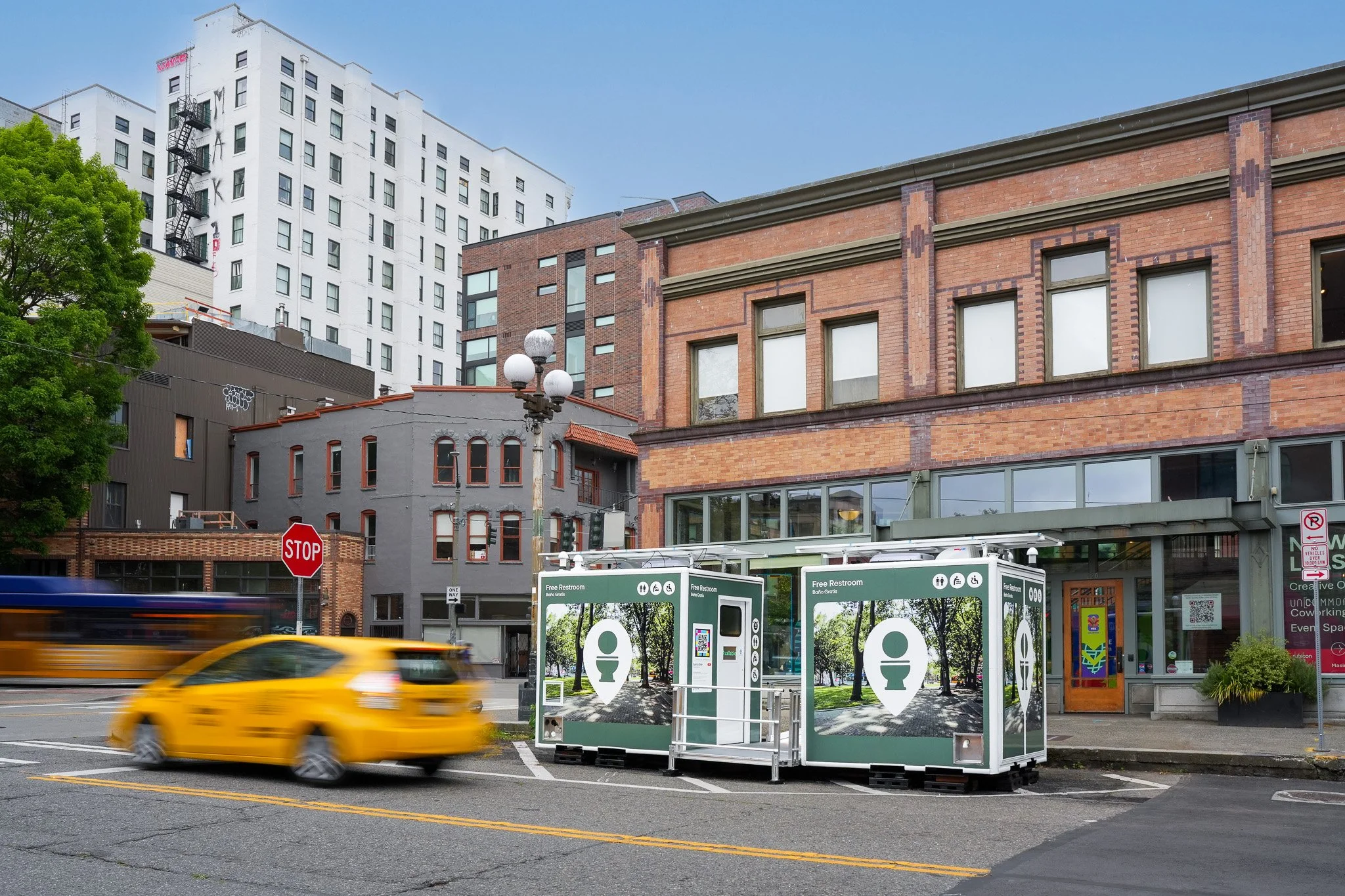
Throne Labs Restrooms located near Pioneer Square in Seattle, Washington.
These days, everyone pays
On a road trip? You’ve certainly plotted out the next McDonald’s or Taco Bell exit, slinked into the side entrance, and found some relief. Maybe you bought a Crunchwrap Supreme, but just as likely, you didn’t. Planning a fast food pit stop in lieu of a public restroom is an American ritual, but it’s an awkward solution that ignores the country’s rich history of public restroom access.
The patchwork of businesses large and small that provide restroom access in the U.S. is not a system designed with intention. It isn’t sustainable, and doesn’t please anyone — including customers and business owners themselves. With a dearth of public restroom access, private businesses — big, ubiquitous fast food chains and small mom and pop shops alike— are chafing under the expectation that they should provide, service, and staff public restrooms for the entire country.
“On weekends, we're basically a public restroom… that means half my job is managing the store, and the other half is cleaning the restrooms,” a fast food chain manager in Washington, DC said. “You can't imagine what we have to deal with here... it scares real customers away. I wish we had another place to send them.” The owner of a Subway franchise echoed that experience: “I had to close my restroom here because of the damage people were doing to it, but I feel bad turning people away because all people need restrooms.”
Restaurants are required to provide customers bathrooms that meet certain legal standards, but those toilets were always intended for paying customers. Unfortunately, because Americans lack other options, that’s not how we use them. That tension leads to underpaid baristas and other shift workers deescalating conflicts around bathroom use and abuse — and becoming the arbiters of who is and isn’t allowed to use the toilet. It’s not a good situation for anyone.
In 2025, after years of operating under an official open-to-all policy, Starbucks rejected the idea that non-customers should be allowed to use its bathrooms. “We have to harden our stores and provide safety for our people," Starbucks CEO Howard Schultz told The New York Times, citing safety concerns for its workers. "I don't know if we can keep our bathrooms open."
The comments attracted some backlash at the time, but ultimately, whether it’s a mom and pop business or the multinational corporation that serves you a venti Americano, businesses never really signed up to be public restroom providers.
Because restrooms are a public good, the burden of funding, building, and maintaining them falls on local governments — and more of them are starting to agree. The more that governments learn it’s an issue their constituents care about, the more likely a new public bathroom is to open up in your own community.
New energy for shared solutions
In New York, Mayor Zohran Mamdani is leading the charge. The most pedestrian friendly city in the country is known for its bustling streets and vibrant nightlife. But it also has a reputation as a place where it’s notoriously tough to pee.
Mamdani made the issue of giving New Yorkers a place to go a key part of his early days in office. In September, he announced the launch of 17 standalone bathroom units destined for public plazas and high-traffic corners of the city that lack public restroom access. The pilot program, which will run for one year, installed bathrooms near Yankee Stadium, Cooper Square, and Brooklyn’s Fulton Street, among other hotspots of urban life.
“Too many New Yorkers know what it’s like to have nowhere to go while they’re on the go,” said Mayor Mamdani. “This pilot is about making sure New Yorkers can count on a clean, safe, accessible bathroom when they need one. We are going to learn from this pilot and build a public bathroom network that meets the needs of New Yorkers in every borough.”
Mandani isn’t alone. Cities across the country are working on bringing a new network of public restrooms online. Chicago just unveiled a new touchless, self-cleaning toilet, part of a new pilot program designed to expand public access to clean, safe restrooms in some of the city’s busiest spots. “Every global city deserves clean, safe public bathrooms,” Chicago Alderman Daniel La Spata said of the program.
Seattle, Atlanta, Washington, DC, Minneapolis, and Los Angeles are just a few of the other U.S. cities experimenting with new solutions to the universal problem of giving residents a place to go. Right now, American cities are experiencing a surge of interest in expanding public restroom access. Knowing what’s possible is just the first step to making our cities cleaner, safer, and more accessible for everyone.